
Identity
Complexity, Part 3

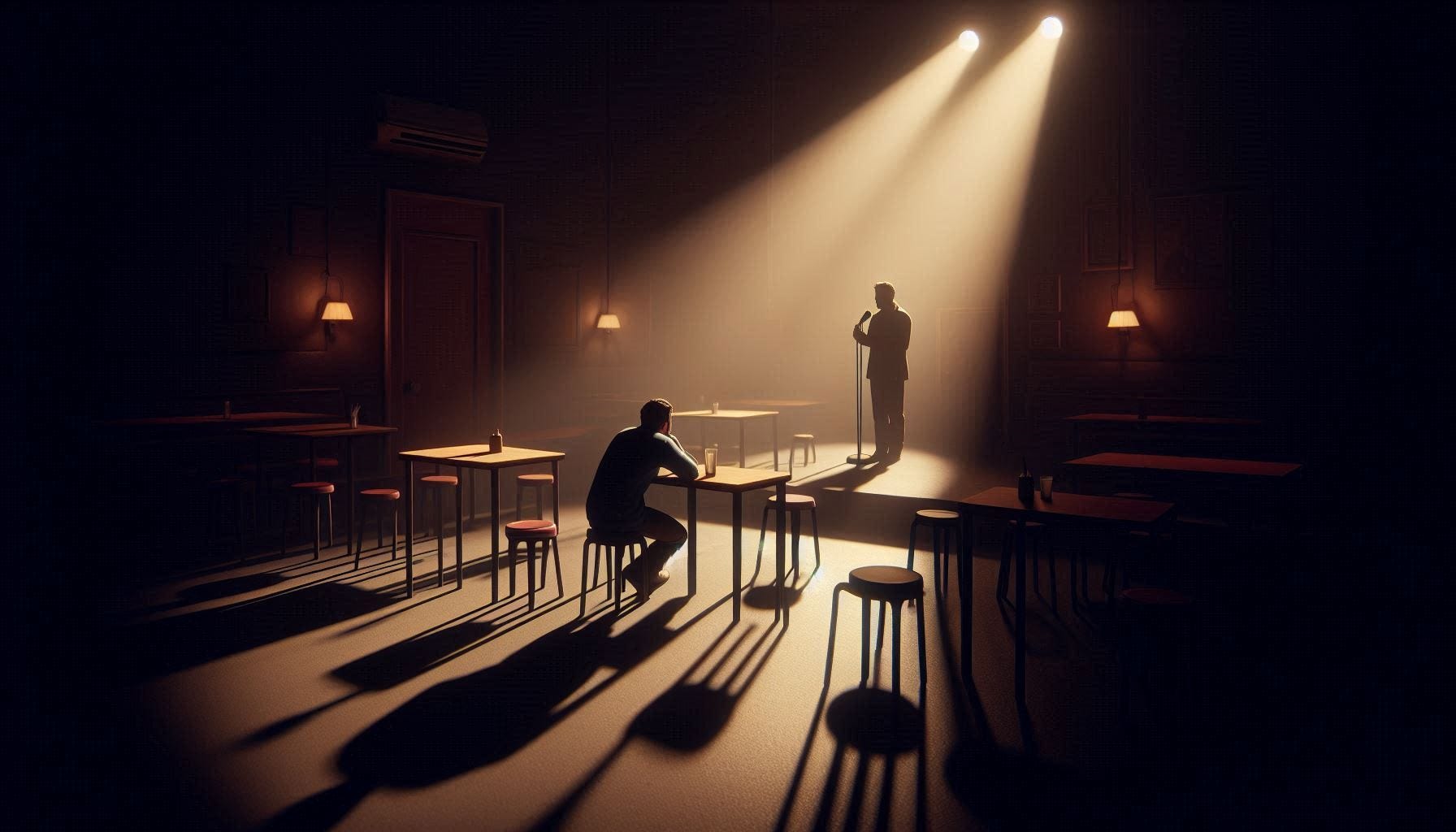
Who am I? Or, to be more exact, who is the “I” who is asking “Who am I?”
The nature of personal identity is one area of complexity the consideration of which surfaces rarely for most of us. We go about our daily lives without thinking about what makes each of us a unique individual and what distinguishes that individual from the world around us.
I read recently the Wikipedia entry on the philosophy of self. One might expect, given the work of philosophers over the millennia, that the question of how to conceive of the self would be, if not a settled matter, at least one in which a significant consensus had been reached. That does not appear to be the case, and I certainly do not suggest that I will add much to the consideration of this topic. As with many subjects I take up, I am mostly interested in asking the right questions.
The first question is how I have come to see myself the way I do; i.e., as a conscious entity connected to a physical body. This seems fairly straightforward and also inaccurate.
Consider the notion of personal space, the area surrounding my body that I treat as sufficiently mine that I determine, or attempt to determine, who can enter trespass in it and under what circumstances. There are individual expectations regarding this space. Some people are more inclined toward close talking than others. Irrespective of this, the existence of personal space might be understood to indicate that our concept of identity extends beyond our bodies.
But how far beyond? Do I see myself as distinct from my surroundings or do my surroundings constitute a portion of my identify? When I am driving my car, this machine is an extension of me, a means of taking my space with me as I navigate the world.
Further, it is common to think of oneself in terms of the geographic space that one calls home. I am a resident of a city, state, and country. I am an earthling.
I belong to a particular species. I also belong to social groupings with other members of the species. My identity is formed in part by interactions with those other members. Who I am is a function in part of those interactions.
I interact with other species as well, most often in ways of which I am largely unaware. My body is its own ecosystem. It is estimated that more than half of the cells of my body are microbial, the majority of which reside in my gastrointestinal system. As important as these microbes are to my health, I rarely think of them until it is time to eat foods known for their probiotic characteristics. I think even less often of the fungi and mites that live on my body. These creatures are residents of my body but they are not part of my identify.
Perhaps we can set aside these conceptions of personal identify that are based primarily on the body. To do so, however, forces us to consider the mind-body problem, another philosophy issue on which there is disagreement. Is the mind independent of the body or is it simply a function of the body?
And what would it mean that the mind is independent of the body? It seems as though it is wholly dependent on the body, and its sense organs, for input from the world around it. And yet this is not the only source of input.
I was intrigued to learn recently that there are people who do not have an internal monologue. I assumed everyone thought the way I think. Of course, not all my time is spent engaging in these narratives. Nevertheless, the fact that there are those who do not have these conversations with themselves at all must say something important about how the mind works to create identity.
Herein lies the problem of personal identity, I suspect. The only tool I have available to me to consider the matter is the subject I am studying. The self-referential nature of this relationship between myself and my mind makes it difficult or impossible to step back to give myself a better vantage point. It is the lesson we learned in elementary school, that the definition of a word cannot include the word itself.
I am reminded of when I discovered that I was suffering from tinnitus. I noticed it first when I was in the bathroom. At first, I thought there was a small motor running in the house. Everywhere I turned, the sound was there. Not surprisingly, my efforts to locate the source of the noise proved fruitless. My brain proved unreliable in applying the skills for locating external sounds to those that were generated within the brain itself.
Thinking about my identity might be analogous to looking for noises that stem from tinnitus. I might be incapable of learning anything of value from an internal monologue when the narrator is my own mind.
What I might conclude, then, is that there are areas of complexity that will remain beyond my ability to understand and address, in which case, I must be content to live with uncertainty.
Once I embrace this conclusion and recognize my inability to achieve an objective view of my personal identity, I see before me limitless possibilities for personal growth. The subject of my internal monologue can be the experiment that is my life. The essential question is no longer “Who am I?” It is “Who am I becoming?”
If the self is fixed, I am incapable of change; who I will become has been determined already by circumstances that now lie in the past. In the present moment, however, many alternatives are available to me. There is uncertainty regarding the choice I will make among these alternatives. Some choices might be more probable than others, but none is a foregone conclusion. Until I choose, who I become in that moment, and the moments that follow, remains an undecided proposition.
Internal Monologue illustration produced with Bing Image Creator
It's ironic that just a few moments ago, one of my nieces sent me an email that stated that Pete Hegseth, Secretary of Defense (or war) just forced the Scouts Organization (formerly Boy Scouts) to exclude transgendered youth and adults. Thus he claims to define the identity for a group of young folk instead of allowing each one of them to define his/her own identity. His hubris is indicative of someone who is very insecure of his own self identity. In fact our current President and political leadership all exhibit great insecurities in their self identities. Why else would they demand individuals identify not as each one desires, but that they demand exclusion, discrimination and isolation of Trans people as well as any one they see as "other."
It is unfortunate that politics has infringed not only on our constitutional rights but on our individual identities as well.