
Workflow

The acting police chief brought me a memorandum he received from one of the officers. It reported the details of on-duty injuries he suffered while engaged in traffic control at the scene of a fire. The injuries were minor, he did not seek medical treatment, and he did not lose time from work due to the incident. I made a mental note to investigate whether there was an official form the officer should have used to report his injuries.
I asked the office staff about the process they used for notifying the village’s workers compensation insurance carrier that an injury had occurred. I have been interim manager here long enough not to be surprised when neither knew what should be done next. The more senior of the two has just two years of experience. As has been obvious to me in other situations, little attention has been paid to developing procedures and educating staff about their duties and the resources they can use to accomplish them. To the extent anyone dealt with on-the-job injuries in the past, I suspect this was done at the highest administrative level on a case-by-case basis.
There are times when one must fly by the seat of one’s pants. In most others, however, it is a failure of management if this takes the place of standard operating procedures. To take such an approach in matters related to worker safety is particularly troublesome.
I have mentioned the concept of workflow in other Field Notes articles. It is a concept that should be familiar to public administrators who trace the roots of their practice in part to Frederick Taylor’s conception of scientific management. The use of flowcharts to map work processes first appeared in the 1920s, motivated by the same focus on improving quality and enhancing the repeatability of specific functions. There are certainly areas of city management that do not lend themselves easily to rigid concepts of the one right way to accomplish a task, but there are many that do. It has been my experience that too little attention has been paid to analyzing these tasks and coaching those who must perform them.
I do not know why I have focused so often on workflows. Early in my career, I discovered that the city I served lacked a clear process for purchasing that started at the requisition step and ended with the payment of the invoice. I developed a single form that could be used as a purchase order, receiving report, and authorization to pay. This process can be handled efficiently today with software applications.
In the same city, I developed a system for accounting for late fees and video rentals at the library. This was motivated by the embezzlement of a small amount of cash by an administrator. It was a simple system. Library staff used a numbered two-part receipt form from an office supply company. These accompanied the cash that was taken weekly to the city clerk’s office where staff would count the money and compare the total to the receipts.
This did not work out as I had hoped, I discovered. Answering a question from auditors required examining library receipts. I found receipts and deposits did not match up. When I inquired in the clerk’s office whether they had been comparing the receipts to the amount of cash that accompanied them, they said they had not. I omitted a key part of the workflow: verifying the procedure was being followed. I was forced to fire a second administrator for embezzlement.
I have not been as diligent as I should have been throughout my career in developing standardized procedures for routine tasks. In most of the organizations I served, there had been concerted efforts to train successive generations of employees in the way things were done. This sharing of institutional knowledge served well in most instances. When it did not, we investigated, found where we were coming up short, and put in place the processes we lacked or refined those that no longer served us well.
I have been working more recently in organizations that have experienced high employee turnover and paid too little attention to putting the right people in key positions. The lack of attention to workflow has been obvious and, for an interim manager, frustrating. The absence of a procedure to handle a workplace injury was just one of several instances I discovered the same day.
I handled the need to file a report with the workers compensation insurance carrier the way I suspect it had been done in the past. I found the necessary resources and coached an accounting clerk in what needed to be done.
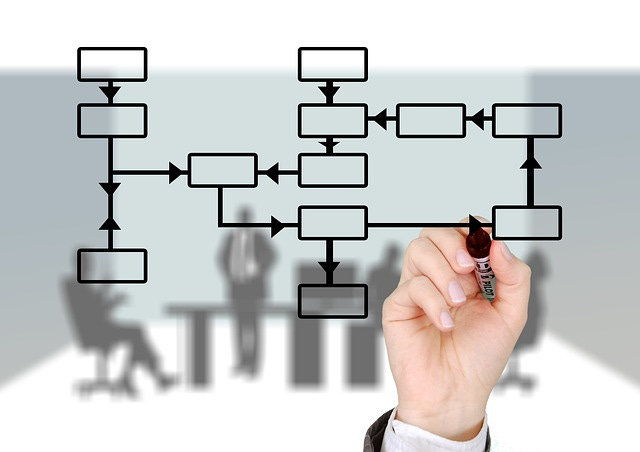
I did not stop there. I thought about what I should do to be sure workplace injuries and similar incidents were properly reported and addressed. I found a form online used by another municipality, shared it with a staff member, and asked her to determine whether it could be modified to suit our purposes. I then set about creating a flowchart that would illustrate the steps that need to be taken to report and incident and get it in the hands of those who needed to be involved.
I tend to be more of a verbal thinking than a visual one. Despite this, I recognize the truth in the saying that a picture is worth a thousand words. As I thought about how best to communicate this workflow, I chose to do so in the form of a flowchart. Applications like Microsoft’s Vision make this a comparatively simple task. The flowchart is awaiting final comments from staff before being shared throughout the organization.
The graphic depiction of the process helped ensure that all the steps were being properly handled. One of the clerical staff members suggested the need to show where copies of reports were to be filed. I included referring incidents to a safety committee for review and comments, even though no safety committee currently exists.
I will not have enough time in my current role to develop all the flowcharts necessary to address the gaps and bottlenecks in our current workflows. This is a challenge any manager is likely to face given the demands on his or her time. My plan is to set a standard, communicate it to staff and my successor, and hope that there is follow-through after I am gone. That seems like a good workflow to address this concern.